Why I built Egidio
I spent months reading fraud reports. Always the same pattern: describe this month's scam, publish a number to block, and start over next month. Scammers change numbers, platforms and names. They don't change method.
So I stopped trying to recognise messages, and started describing manipulations instead.
That is all Egidio is. An app that doesn't try to memorise yesterday's scam, but to recognise the psychological lever behind it — manufactured urgency, a fabricated bond, an unexpected windfall. Those levers are centuries old. They don't get reinvented every Tuesday.
Egidio is built by one person. That imposes a discipline: promise nothing I cannot keep, quote no figure I cannot source, and publish the method so people can prove me wrong. That is why the Threat Laboratory and the Methodology page are public, and why everything I write there is free to reuse.
Gilles, founder of Egidio
A block that teaches you something
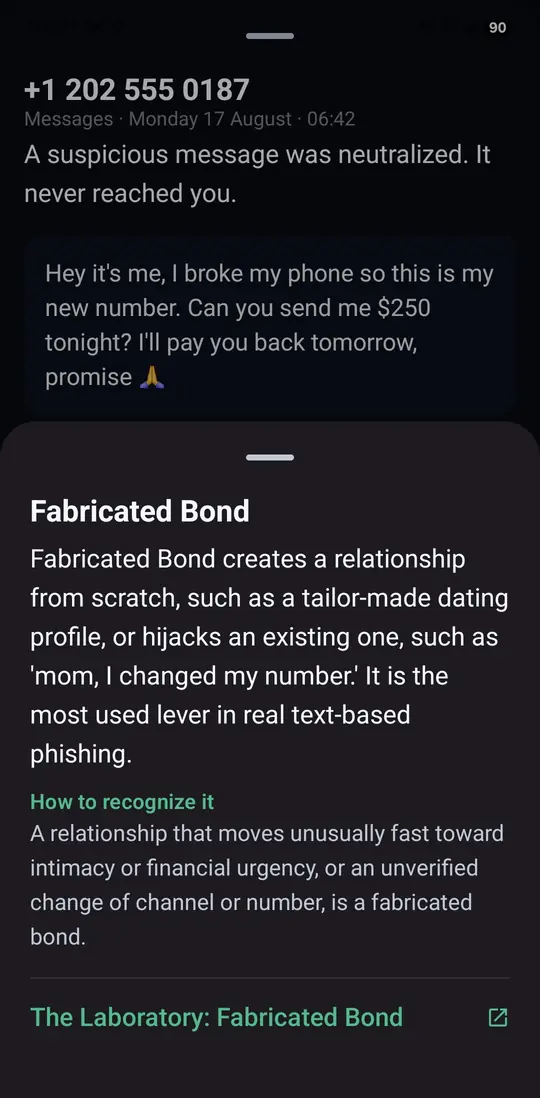
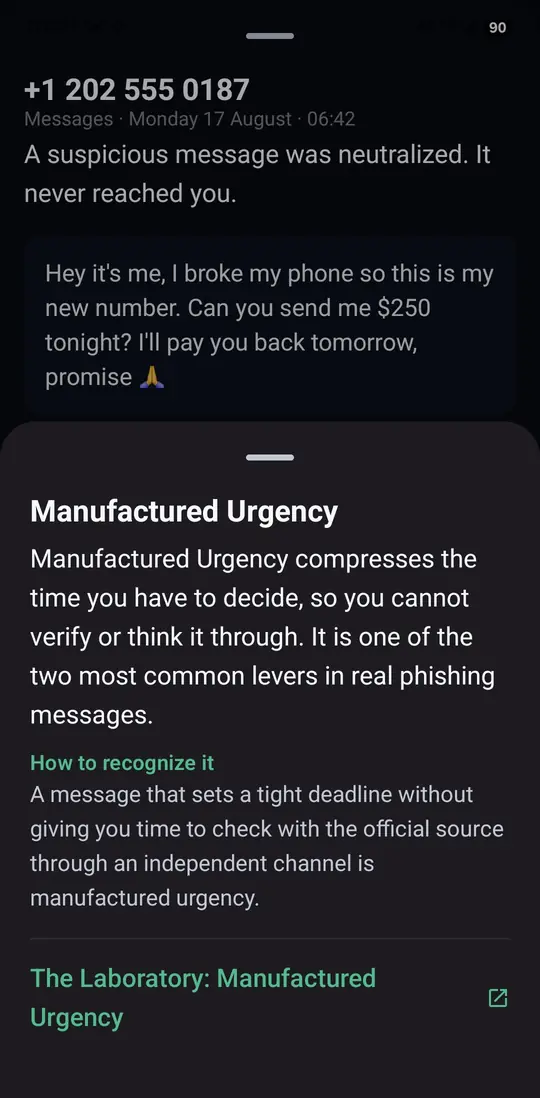
When Egidio neutralises a message, it doesn't just make it disappear. It names the mechanism used, explains it in plain language, and gives you the tell that lets you spot it on your own.
At the bottom of every explanation, a link to the matching Laboratory dossier — with its sources. You can check what you are told. It is protection designed to make you less dependent on it.
Where scams actually arrive
A fraud attempt doesn't only come as a call. It comes through the messaging app where you chat, under the classified ad you just posted, from the profile writing to you, in the inbox where you are expecting an invoice.
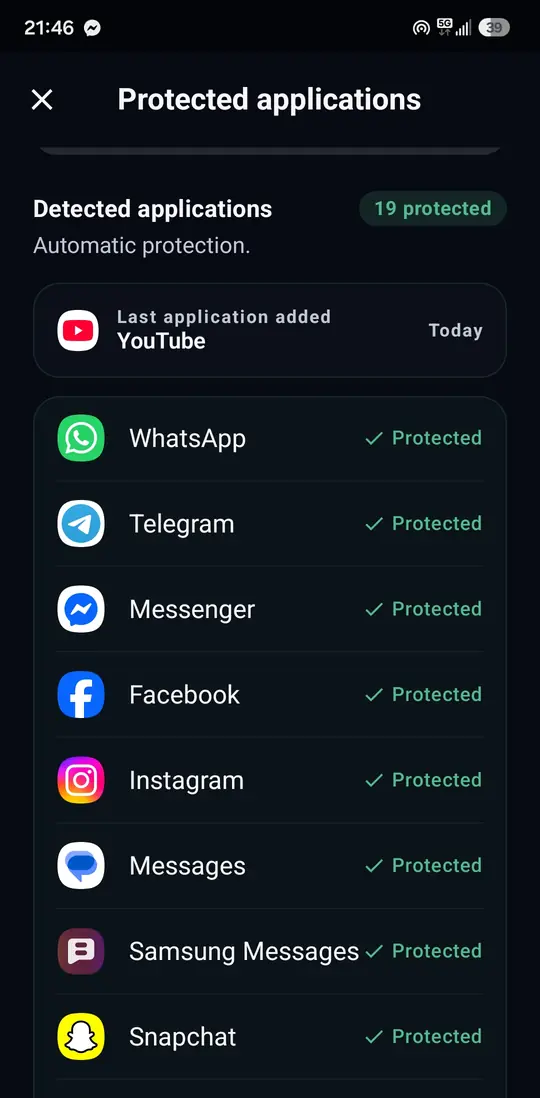
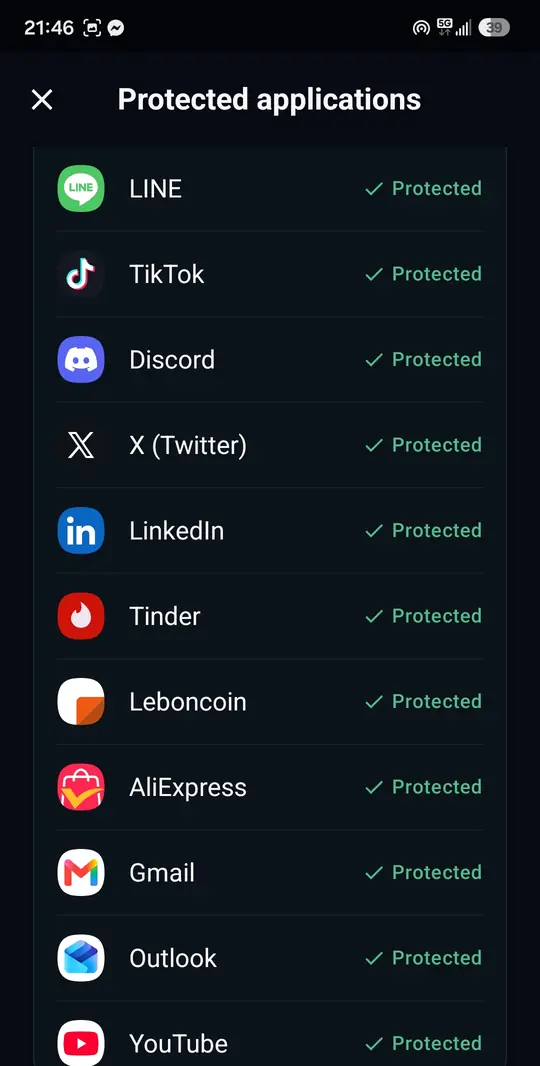
Egidio detects the apps installed on your phone and covers them automatically — messaging, social networks, marketplaces, dating, email. These two screens are from a phone after installation: nothing had to be configured.
Ten screens, unstaged
These are real screenshots of the application, taken as they are. Scroll through.
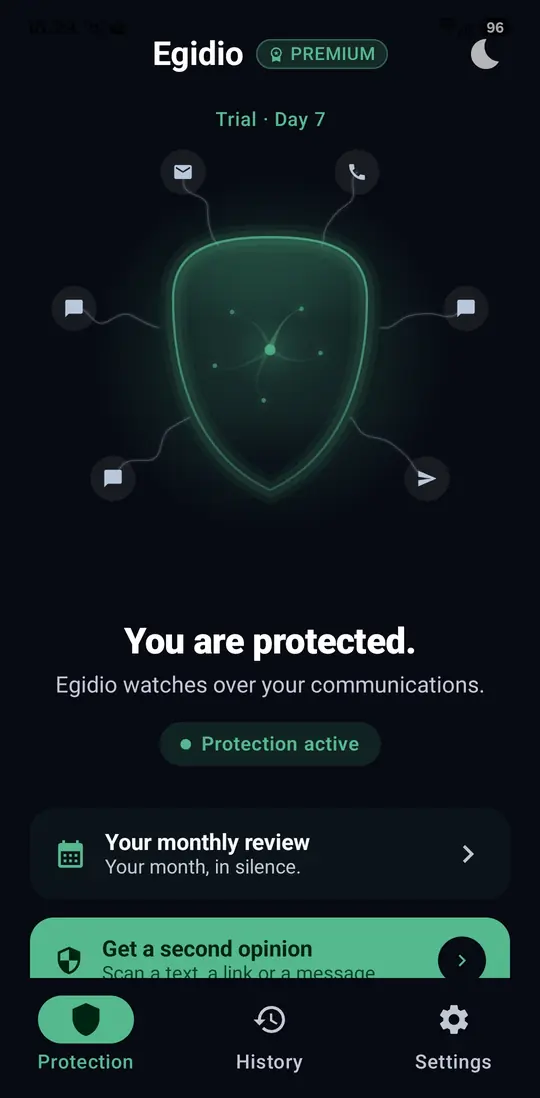
You are protected.
A state, not a dashboard. That is all you need to know day to day.
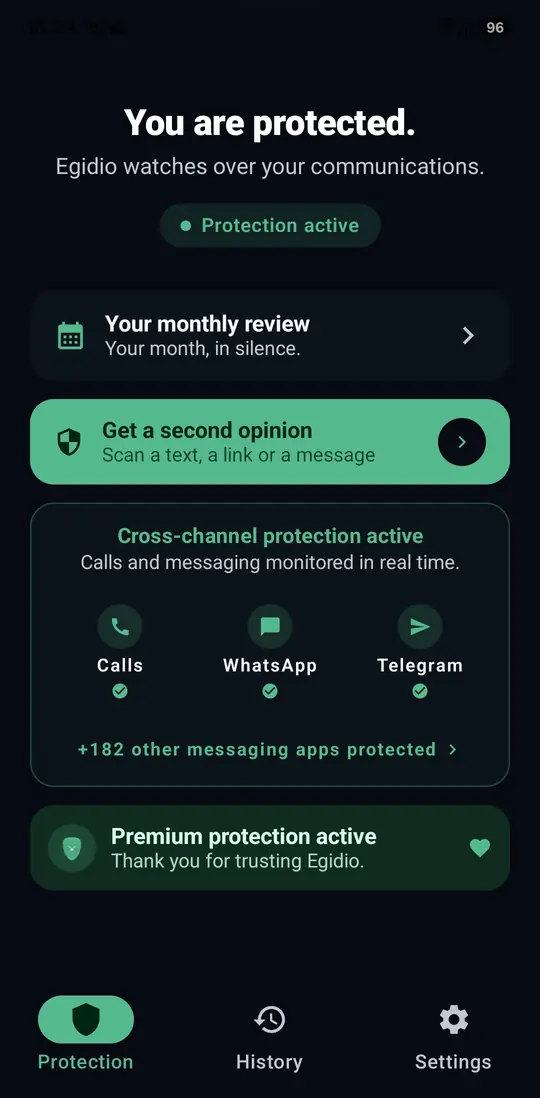
Calls and messaging together.
183+ apps covered from installation, with nothing to configure.
The apps it detects.
Automatic protection. The list grows with whatever you install next.
Well beyond messaging.
Marketplaces, dating, professional networks, email: wherever an attempt can land.
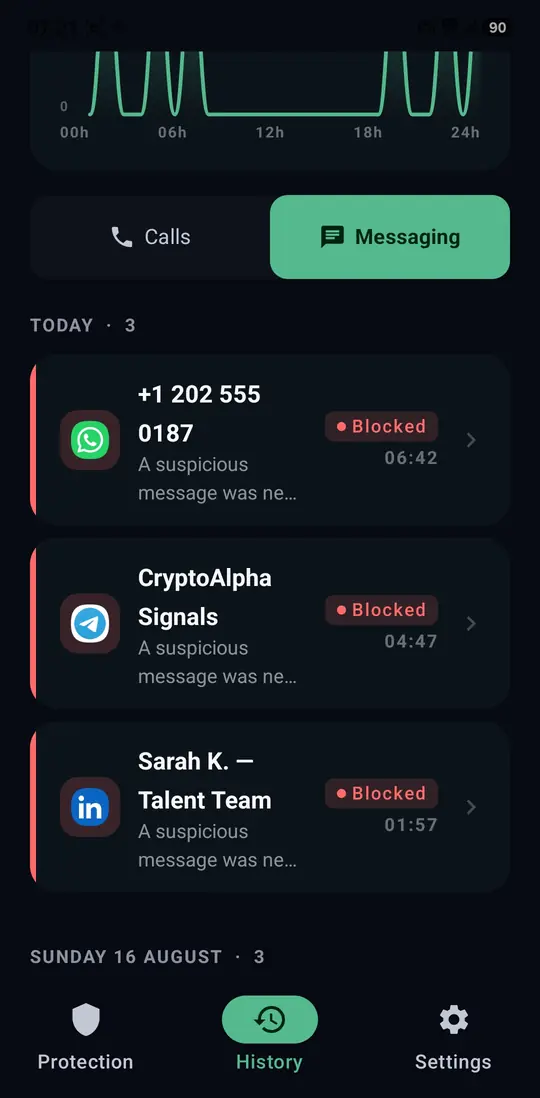
Every block, dated and explained.
Plus your vigilance hours, showing when you get targeted.
The name of the manipulation.
Not just « blocked »: the lever used, described plainly.
The tell that gives it away.
Every explanation links to its matching sourced dossier.
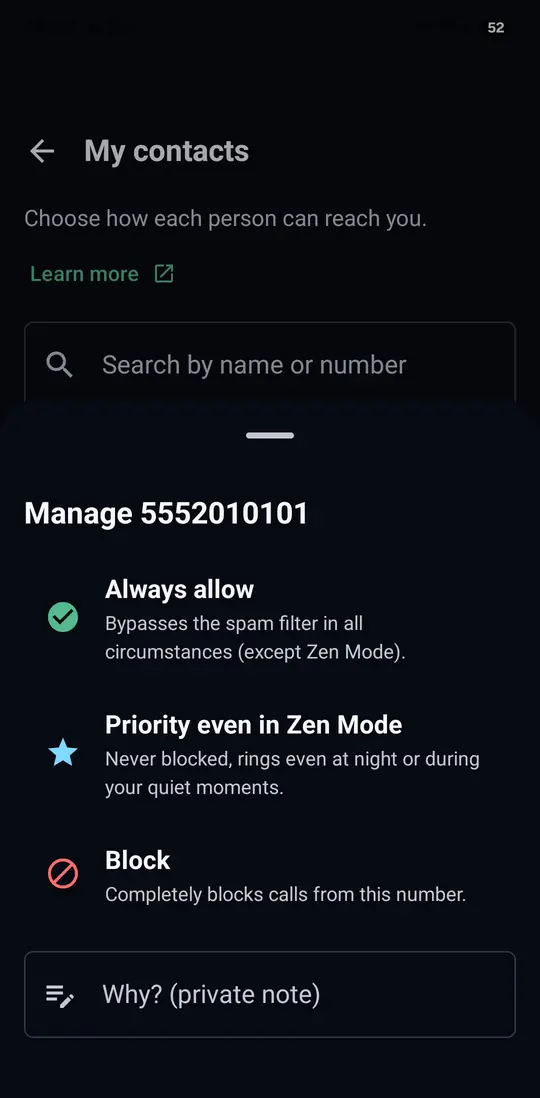
You decide who gets through.
Always allow, priority even in Zen Mode, or block.
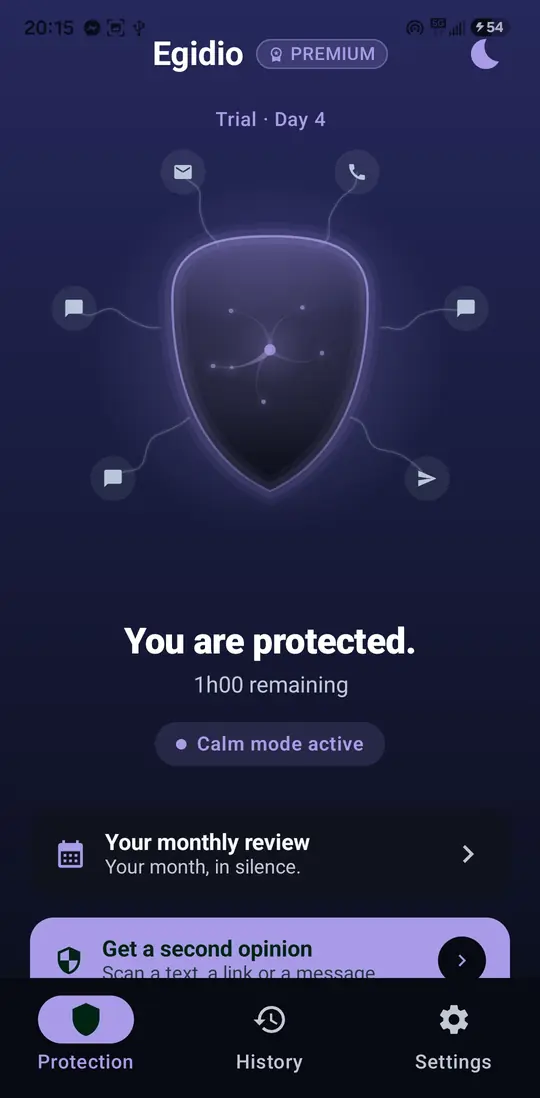
Zen Mode.
Silence by choice. Your priority contacts still ring.
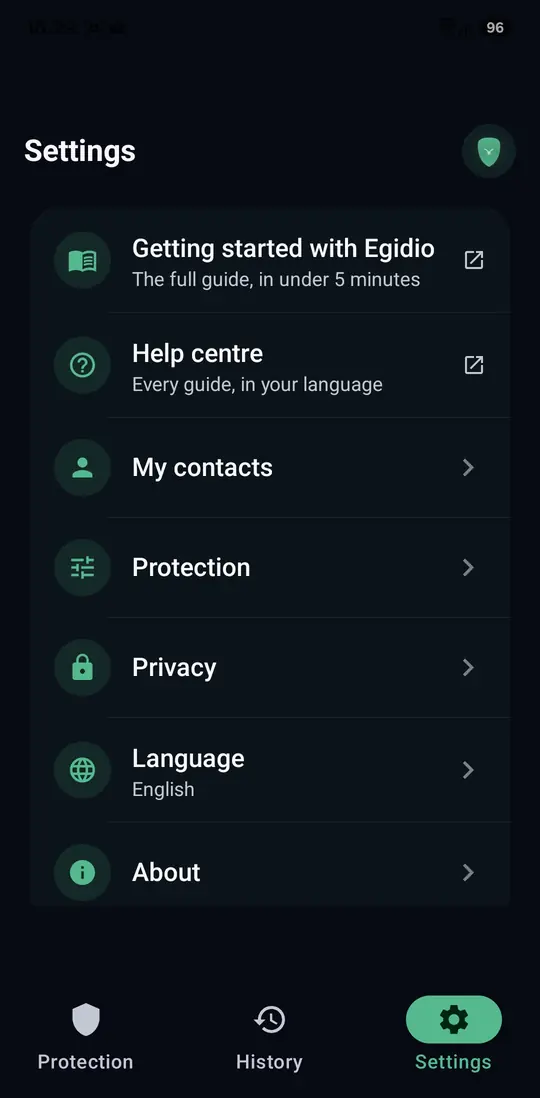
Settings you can read.
The help centre in your language, privacy on one screen.
← Swipe to see all ten screens →
What I won't compromise on
Protect the person, not the channel
Scammers don't attack phones, they attack people. A call and a message minutes apart are one single attempt — Egidio treats them as one.
Understand rather than filter
Instead of asking « what message is this? », Egidio asks « what manipulation is this? ». Platforms change, psychology doesn't.
Privacy is a principle
Security should never require surveillance. Analysis happens on your device. No account to create, no advertising.
What you get
Two tiers, no catch. The free one isn't a demo that expires: it protects your calls, forever.
- Unwanted call filtering
- Every block explained in plain language
- Your priority contacts ring, even at night
- No account, no advertising
- Messaging: WhatsApp, Telegram and 183+ apps
- Medusa engine: correlation between calls and messages
- Second opinion: paste a message, get an explained verdict
- Dual SIM, unlimited Quiet Mode, exportable history
Everything claimed here can be verified
A sales brochure is a poor place to ask you to take someone's word for it. Here is where to go and check.
Does Egidio work without a subscription?
Yes. Unwanted call filtering is free and stays free — it is not a demo that expires. The Premium subscription extends protection to messaging apps, adds cross-channel correlation and covers up to 4 people.
Are my messages sent to a server?
No. Analysis happens on your device: that is the project's founding principle, not an option. Egidio also asks for no account and shows no advertising.
What makes Egidio different from a filter?
A filter recognises what it has already seen. Egidio describes the lever of manipulation used — manufactured urgency, a fabricated bond, an unexpected windfall — then explains it and gives you the tell, so you can catch it without the app.
What are the in-app explanations based on?
On the Threat Laboratory dossiers published on this site with their sources. Every explanation in the app links to its dossier, so you can check it.
Try it tonight
Installation takes two minutes. Calls are protected free, forever — judge it on the evidence.